
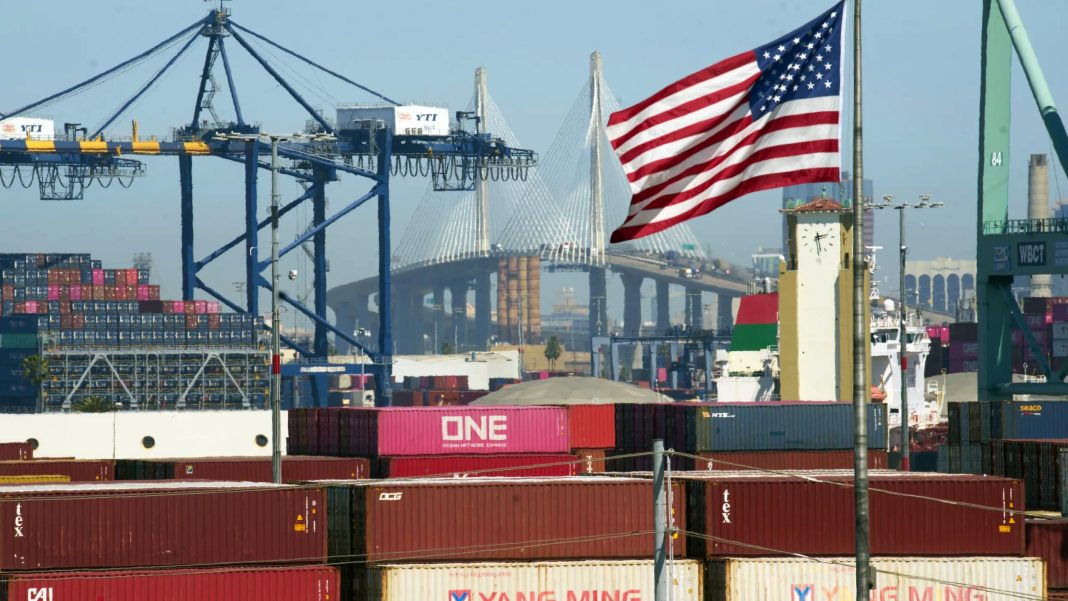
Washington: The United States has begun imposing new 10% and 12.5% import tariffs on a wide range of goods from Pakistan, India, China, the European Union, and more than 60 other trading partners, replacing temporary duties that expired on Friday.
The new measures were announced through a notice published in the US Federal Register and take effect immediately. According to the US administration, the tariffs target countries that it says have failed to adequately enforce laws aimed at eliminating forced labour from their supply chains.
The move marks the latest development in the Trump administration’s trade policy and could affect a significant share of goods entering the United States from some of its largest trading partners.
New Tariffs Replace Temporary Import Duties
The latest duties replace the temporary 10% global tariff that had remained in effect for 150 days following a ruling by the US Supreme Court.
Earlier this year, the court ruled that the Trump administration could not continue enforcing reciprocal tariffs of between 10% and 50% that had been introduced under national emergency powers to reduce the US trade deficit.
Following that decision, the administration shifted its legal basis to Section 301 of the Trade Act of 1974, a trade enforcement mechanism widely regarded by legal experts as providing a stronger legal foundation for imposing import duties.
According to US officials, the new tariffs will apply to approximately 99.4% of US imports, making them one of the broadest trade measures introduced in recent years.
Several Key Products Exempt From New Duties
Despite their broad scope, the tariffs will not apply to several strategic commodities and products.
Exemptions include crude oil, natural gas, fertilisers, and selected agricultural products. Goods already subject to tariffs under Section 232, including automobiles, steel, aluminium, and copper, will also remain outside the scope of the new measures.
In addition, many products covered under the United States-Mexico-Canada Agreement (USMCA) will continue to receive preferential treatment and will not be affected by the latest tariffs.
US Says Move Aims to Combat Forced Labour
In a statement, US Trade Representative Jamieson Greer said the United States has prohibited the import of goods produced through forced labour for nearly a century and has consistently enforced those laws.
He argued that America’s trading partners should uphold similar standards to protect human rights and ensure fair competition in international trade.
Greer added that countries that already have trade agreements with the United States and are subject to negotiated tariff ceilings would not face duties above those agreed limits.
Pakistan Among Countries Facing 10% Tariff
Under the final tariff schedule, products imported from Pakistan, India, Bangladesh, the United Kingdom, Canada, Mexico, Malaysia, Indonesia, Cambodia, Sri Lanka, Argentina, Ecuador, Guatemala, Honduras, Jordan, El Salvador, Trinidad and Tobago, and several other countries will be subject to a 10% import tariff.
Certain other trading partners will face a 12.5% tariff, depending on the product category and country-specific measures outlined by the US administration.
The new duties are expected to affect a broad range of manufactured goods and industrial products entering the American market.
International Reaction
The announcement prompted criticism from several US trading partners.
European Union foreign policy chief Kaja Kallas described the tariffs on European goods as unjustified, rejecting Washington’s claims that the EU has weak enforcement of forced labour regulations.
She said the European Union maintains stronger labour protections than the United States and has fulfilled all commitments under its previous trade agreements with Washington.
Kallas added that Brussels would seek formal clarification from the US administration regarding the new measures.
Meanwhile, Australia and Brazil described the tariffs as unnecessary and unfair, saying they would pursue diplomatic efforts aimed at having the measures reconsidered.
Canada, which recently faced separate US tariffs on approximately $20 billion worth of exports, adopted a more cautious response.
Canadian Minister for Canada-US Trade Dominic LeBlanc said Ottawa would continue constructive discussions with Washington in the coming weeks to protect the economic interests of businesses and consumers in both countries.
US Officials Face Domestic Criticism
The tariff policy also drew criticism within the United States.
Massachusetts Governor Maura Healey warned that the new import duties would increase prices for consumers, raise costs for businesses, and weaken the competitiveness of the US economy.
Trade law experts noted that while the new tariffs are similar in scale to the temporary duties they replace, their implementation under Section 301 could make legal challenges significantly more difficult than those brought against the previous measures.
The Trump administration has increasingly relied on tariffs as a central element of its trade policy, arguing that stronger import duties help protect American industries, reduce unfair trade practices, and strengthen domestic manufacturing. However, critics argue that higher tariffs often increase costs for importers, businesses, and consumers while creating uncertainty in global supply chains. The latest measures are expected to have implications for exporters across Asia, Europe, and the Americas as governments assess their economic and diplomatic responses.